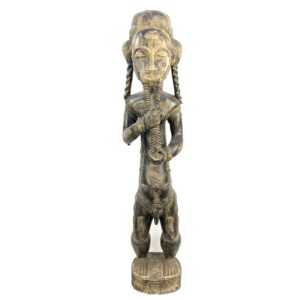
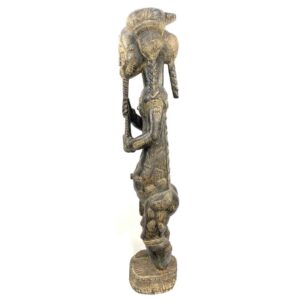
East African Birthing Chair – Chill
$240 $192
Same day dispatch
An pre-loved East African birthing chair, hand-carved from solid hardwood and rich in cultural symbolism. The sculptural form is elevated by intricate animal carvings, each motif reflecting strength, protection, and the deep connection between community, motherhood, and the natural world. Worn beautifully with age, the surface carries a warm patina that speaks to both craftsmanship and tradition.
More than a functional object, this piece stands as a striking work of tribal art—grounded, powerful, and unmistakably authentic—equally suited to a curated interior or a serious collection of African artefacts.
Details
Country of Origin………………East Africa
Function……………………….. Furniture
Dimensions……………………. 95 x 72 x 27
In stock
Description
Additional information
| Weight | 6 kg |
|---|---|
| Dimensions | 1 × 1 × 1 cm |
Related products
-
Sale!
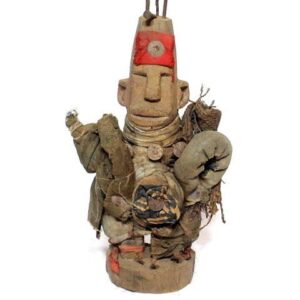
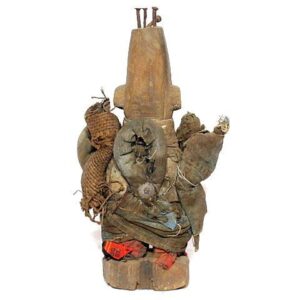
Ewe Voodoo Statue :: (stat-gh-ewe-0009)
Original price was: $260.$190Current price is: $190. -
Sale!
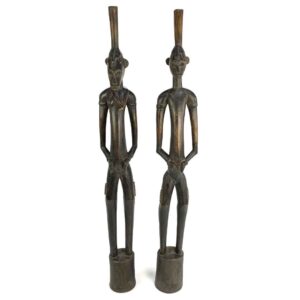
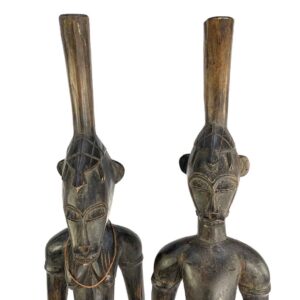
Individual or Set of Senufo Statues :: (Stat-IV-Senu-001/002)
From $390Select options This product has multiple variants. The options may be chosen on the product page -
Sale!
-
Sale!