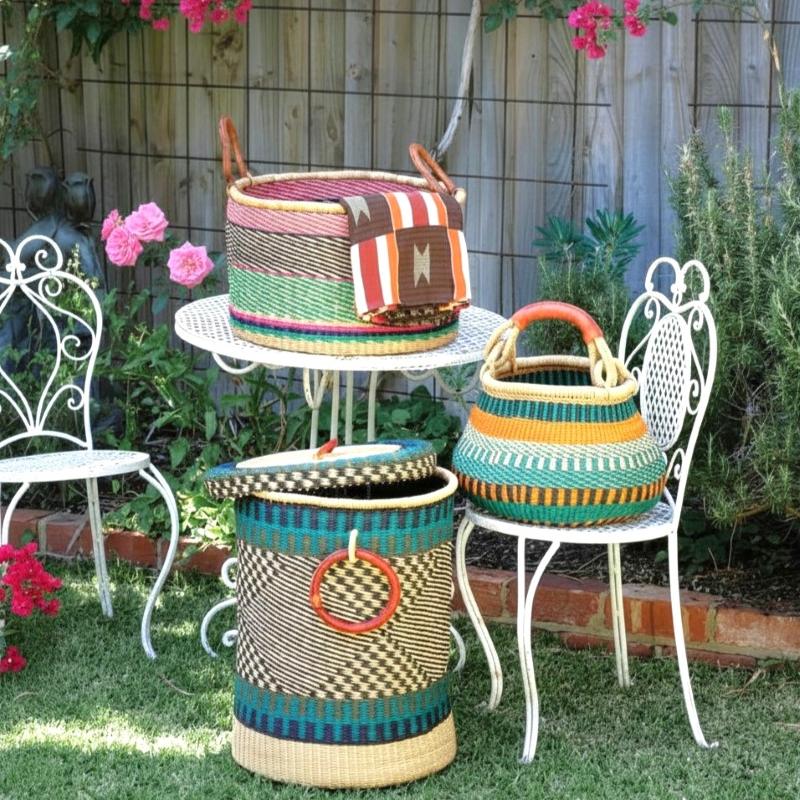
From Elephant Grass to Finished Basket
The first tool is the weaver’s teeth
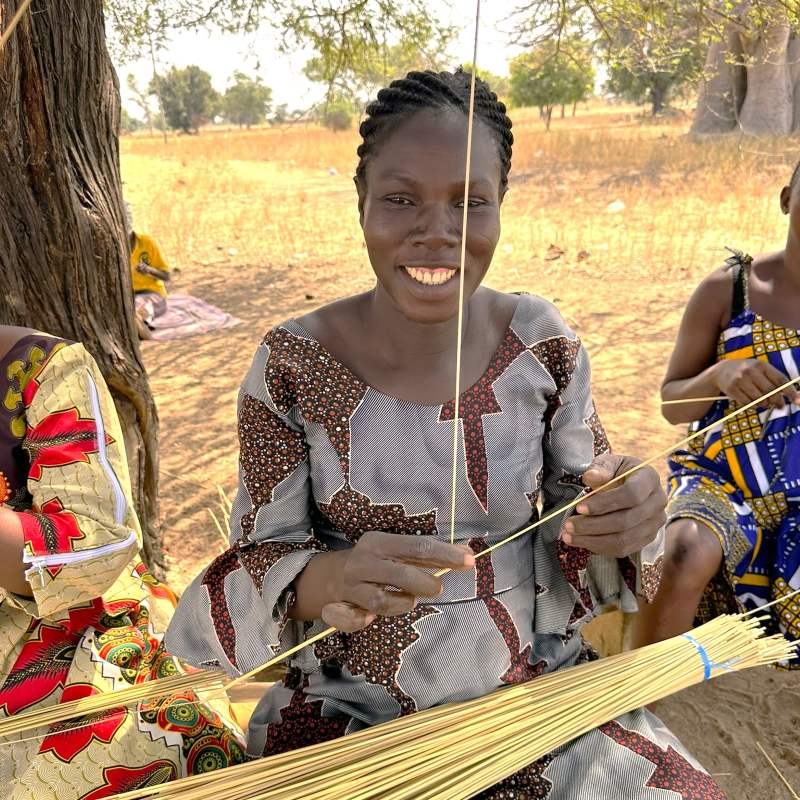
Before a single row of a Bolga basket is woven, every stalk of grass is split in two, and the split usually starts with the weaver’s teeth. Each half is then rolled tight against the thigh into a twisted strand. That twist is what gives the straw its strength, along with a slight wave that makes it easier to weave.
Bolga baskets are made by the Frafra people, also known as the Gurune, in the villages around Bolgatanga in Ghana’s Upper East Region.
The grass is split, twisted, dyed and woven over three days to a week.
No pattern sheet
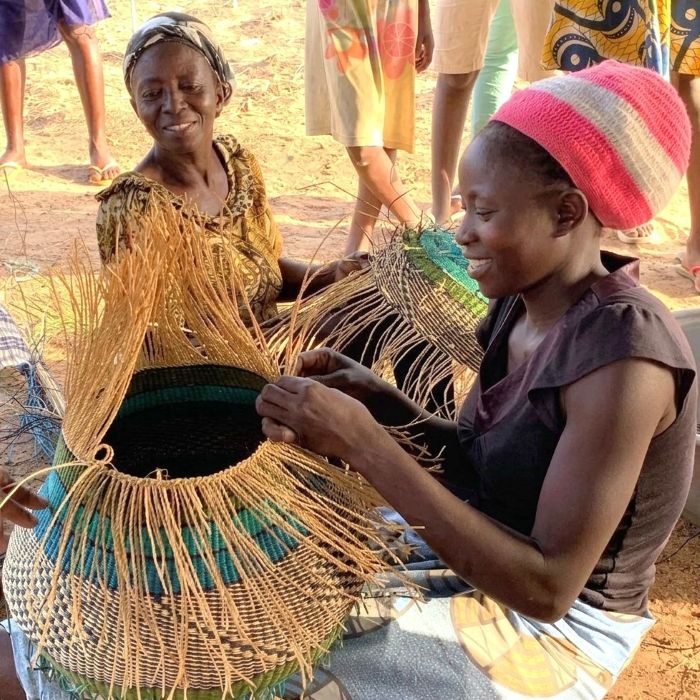
Designs are worked from memory. Weaving starts at the centre of the base and builds outward and up to the rim, with thicker or finer straw chosen depending on whether it’s going into the base, the sides or the handle.
Some shapes change how the weaver has to work. Agana Clement rates the pet basket as his hardest: “After you finish the base, you have to squat down to continue weaving.”
One day, or three
The time it takes depends largely on the size of the basket. Nsoh Agana says the oval basket is his easiest because it isn’t as large, and “I can weave more in a day.” The three-set laundry basket is a different job: “I can weave one in three days.”
Across the range, a basket takes anywhere from three days to a week, around five for a typical one, depending on its size and how detailed the pattern is.
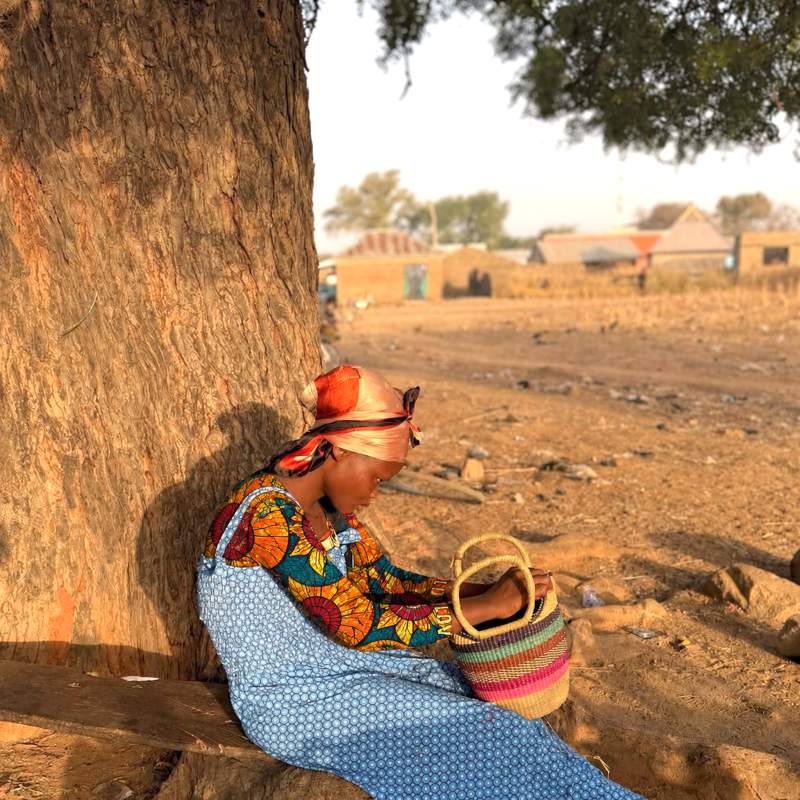
Where the grass comes from
The raw material is elephant grass, known as veta vera, from the floodplains of the White Volta around Bolgatanga.
Only the top of the stalk is used, and the roots stay in the ground so the grass grows back.
After cutting, the grass dries in the sun for a few days, then it’s tied into bundles of equal length and sold that way.
Weavers buy their straw, which is why Ayipoya Aberina likes taking orders: they come with an advance payment, which she uses “to purchase the straw in order to weave quickly.”
Colour
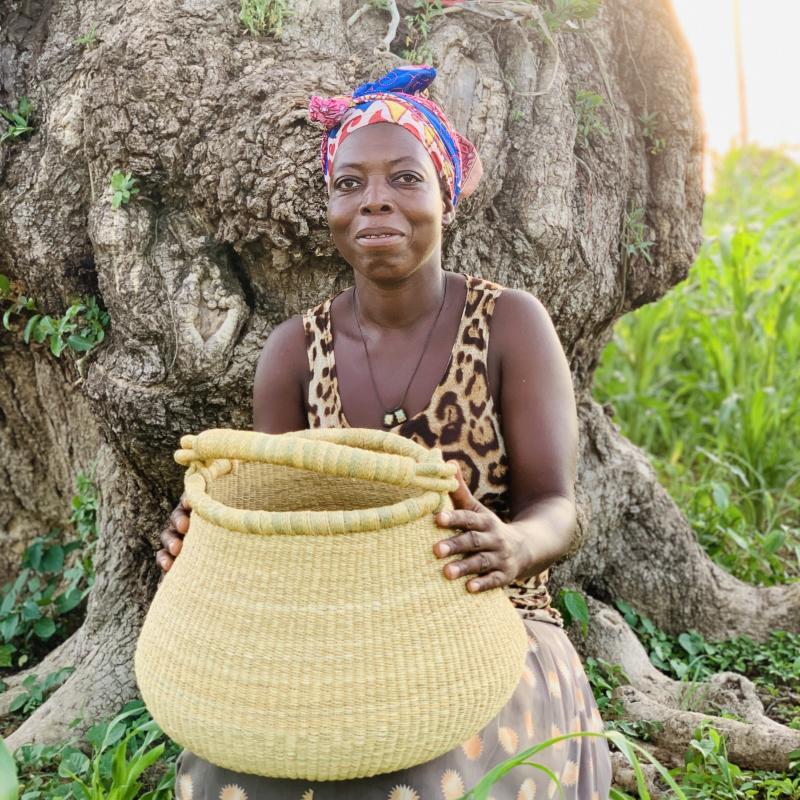
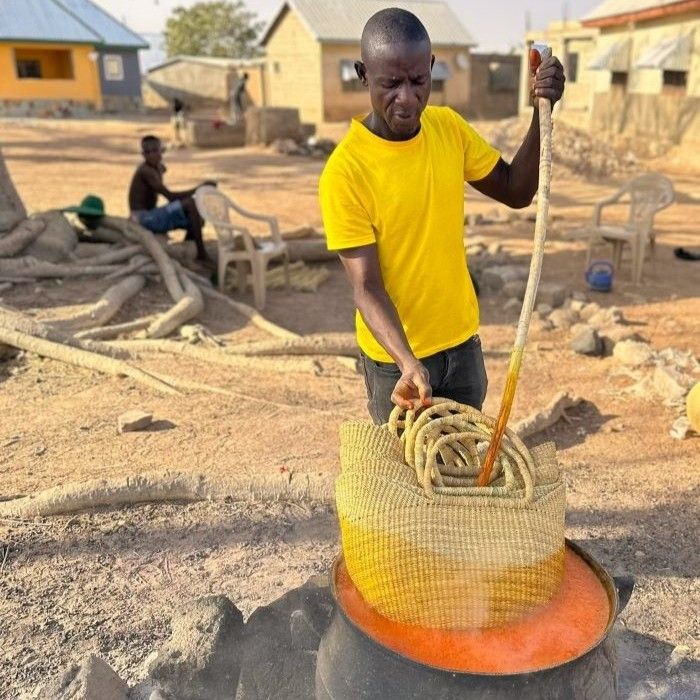
Dyeing is often done at home, by the weavers and their families. Adampoda Seboka learnt weaving from her mother and “used to help her dye straw when I was little.”
The straw goes into pots of boiling dye in bunches. Around 90% of the dyes our weavers use are natural, made from bark, plants and other local organic materials.
The rest are dyes made specifically to work with elephant grass. For the brightest colours, the straw is often dyed yellow first and then dipped again in the final shade. It then dries for about a day.
Some weavers skip dye entirely. Abanye Asackpala explains: “I always weave natural baskets because my mother-in-law used to weave natural baskets only.” That plain straw colour is what you’ll see in our natural market baskets.
Finishing
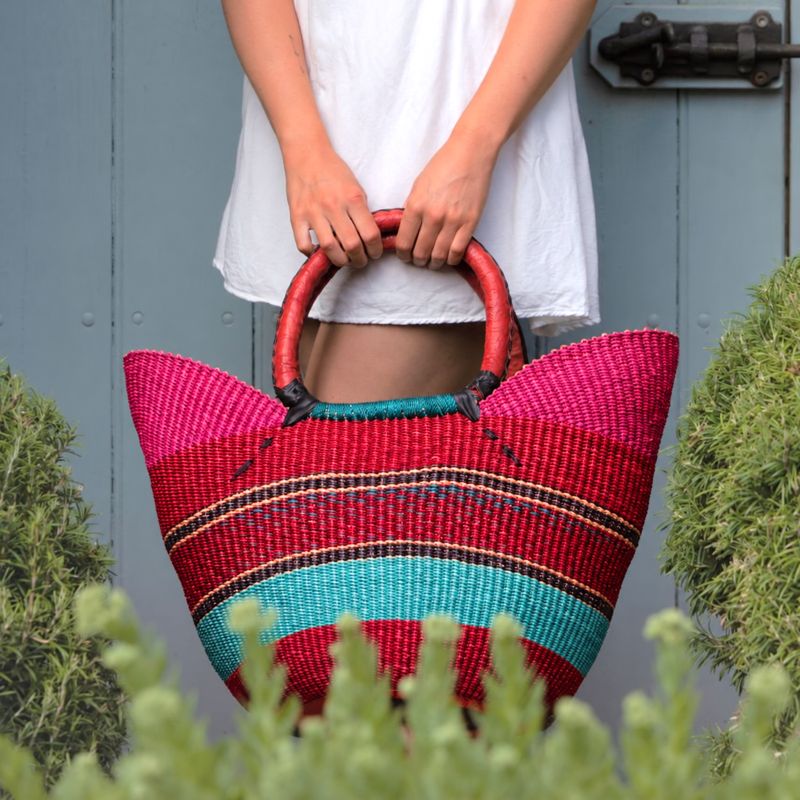
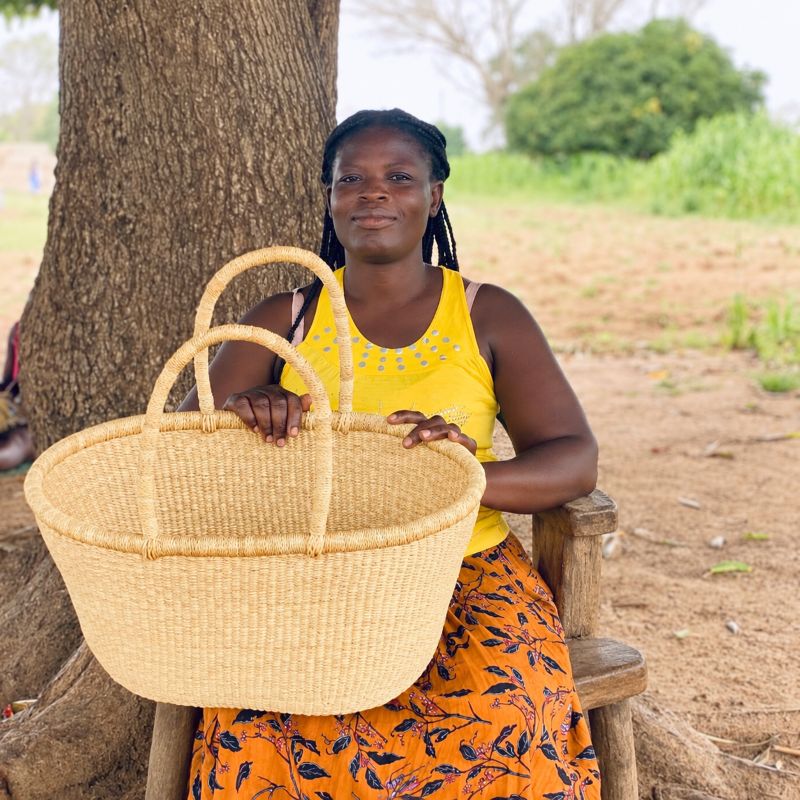
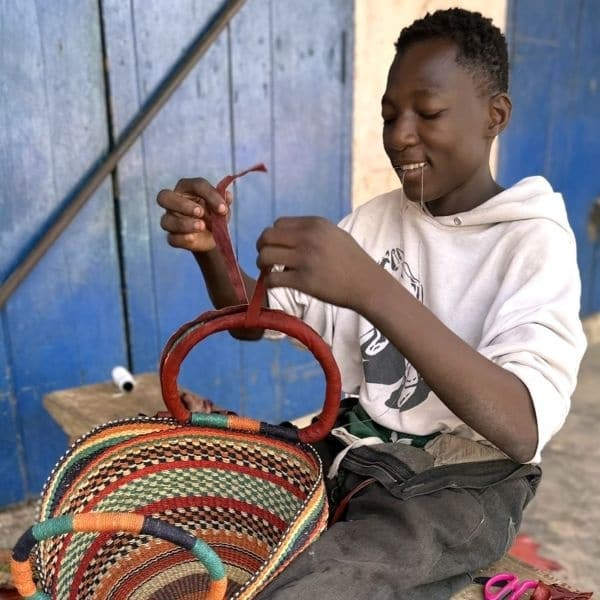
The rim is either left flat or wrapped in straw to form a rounded edge. Handles are built by wrapping straw tightly around a grass core, and on our market baskets, leather is wrapped over the top. Last of all, the stray ends poking out of the weave are trimmed off.
From Bolgatanga to Melbourne
We’ve bought from the same weavers in Bolgatanga since 1997. Simon, our director, visits every year and chooses each basket himself in the villages around town. You can read more of the weavers’ own stories on our Our Weavers page, and more on how we work in The Bolga Story.
From Ghana, the baskets come to our shop in St Kilda, Melbourne, and go out to customers across Australia. T
he twisted grass softens in water, so if a basket gets squashed in transit, you can soak it for a minute and push it back into shape.
Our shaping and care guide shows how, and the full range is in our Bolga basket collection.